

Sell Your Fire Damaged House in
Colorado
Colorado's fire landscape has changed in ways most homeowners didn't expect — and many have found themselves dealing with fire damaged property that they never anticipated owning. Whether the damage came from a wildfire pushing through a Front Range community or a structure fire in a Denver neighborhood, the situation you're facing is real and the decisions ahead aren't simple.

We Buy Fire Damaged Houses purchases fire damaged properties across Colorado for cash, in as-is condition. No repairs, no listings, no real estate agent commissions, and no waiting on a buyer whose financing might not come through. Fire damaged homes are the only properties we buy, and that focus means we know how to value them accurately — from light smoke damage to complete structural loss.
If you want to understand your options without any pressure, start here. The evaluation is free, the offer comes with no commitment, and you’re never obligated to proceed.
Fire Damage In Colorado
A State That Redefined What Wildfire Risk Looks Like
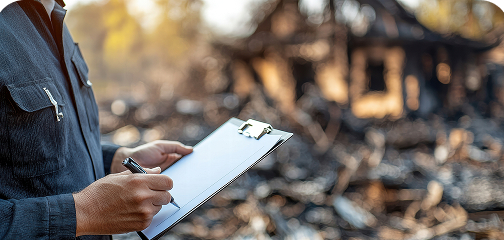
For most of Colorado’s history, wildfire was understood as a risk for mountain communities and forested areas. The Marshall Fire changed that understanding permanently.
The Marshall Fire: Colorado’s Most Destructive
On December 30, 2021, a wind-driven grassland fire swept through the densely populated suburbs west of Denver. Fueled by 100-mile-per-hour gusts and months of record drought, the Marshall Fire destroyed 1,084 homes in Louisville, Superior, and unincorporated Boulder County in a single day. It was the most destructive wildfire in Colorado history by a significant margin — causing over $2 billion in total losses, according to the Colorado Division of Insurance. These weren’t isolated rural properties or mountain cabins. They were homes in suburban neighbourhoods, on streets where residents had never thought of wildfire as a personal risk.
The Marshall Fire also exposed a widespread underinsurance problem: the Colorado Division of Insurance found that 67% of homeowners who lost their homes in Boulder County did not have enough insurance coverage to fully replace them. For many, selling a fire damaged lot or a partially rebuilt home was a more realistic path forward than fighting an insurance shortfall while trying to rebuild.
Wildfire Risk Extends Across the State
More than 332,000 Colorado homes are estimated to be at wildfire risk — and the majority of them are not in mountain communities. They’re in the Denver metro area (an estimated 69,000 homes), Colorado Springs (51,000), and Fort Collins (14,000). The wildland-urban interface has expanded as Colorado’s population has grown, and fires that once burned in remote areas now regularly threaten established residential neighbourhoods. From the Black Forest Fire in El Paso County to the Cameron Peak Fire in Larimer County to the fast-moving grassland fires along the Front Range, the pattern repeats across the state.
Structure Fires Across Urban and Suburban Colorado
Beyond the wildfire risk, Colorado’s cities and suburbs experience thousands of residential structure fires each year from conventional causes — electrical faults, heating equipment failures, cooking incidents, and accidental ignition. Denver, Colorado Springs, Aurora, and the growing communities of the Front Range all generate significant residential fire incident volumes annually. For many Colorado homeowners, the fire that damaged their property started inside it, not from a wildfire approaching from outside.
Understanding Your Options
Repair and Sell — or Sell As-Is?

Once the immediate situation has been addressed, most Colorado homeowners with fire damaged property are weighing the same two paths. Here is what each actually involves in this state.
Path 1: Repair, Then Sell on the Market

Colorado’s construction costs are among the highest in the Mountain West. Full restoration of a fire damaged home — structural repair, smoke remediation, electrical and HVAC system replacement, and finish work — typically runs between $60,000 and $150,000 or more depending on the extent of damage and the market the property sits in. In Boulder County, the Denver suburbs, or mountain communities where property values are high and contractor availability is limited, those costs can climb further.
Beyond the money, there’s the timeline. A full repair project in Colorado typically takes four to nine months. During that period you’re carrying costs — mortgage, insurance, utilities — on a property you can’t use or sell. For homeowners who need to move forward, that wait is a genuine burden. And if there’s an insurance shortfall (as was the case for the majority of Marshall Fire homeowners), the financial pressure can become acute.
Path 2: Sell As-Is to We Buy Fire Damaged Houses

We buy the property exactly as it stands today. No repairs, no cleanup, no staging. We evaluate what’s there honestly — accounting for Colorado’s construction costs, the local market, and the specific type and extent of damage — and give you a written cash offer that reflects it fairly. Not a lowball figure padded for negotiation, but an honest assessment of what’s actually there.
Once you accept, we handle the rest. Most Colorado transactions close in seven to fourteen days. No commissions, no closing costs on your side, and no risk of a financing contingency killing the deal at the last moment. What we offer is what arrives at settlement.

Colorado Legal Requirements
What You Need to Know Before Selling a Fire Damaged Home in Colorado
Colorado has clear and well-established disclosure requirements for property sellers, and fire damage is explicitly covered on the standard disclosure form. Getting this right matters — both to protect you legally and to keep the transaction on track.
Colorado's Seller's Property Disclosure Form
The Colorado Real Estate Commission provides a standardised Seller’s Property Disclosure form, used in the vast majority of residential transactions in the state. The form directly asks sellers whether the property has sustained any damage from fire, hail, wind, flood, or other casualty — and it requires a full, honest response. Colorado courts have found that sellers are in a superior position to know the condition of their home and therefore bear an affirmative duty to disclose defects. The relevant statutory framework is found primarily in C.R.S. § 38-35.7, which governs disclosure obligations in Colorado residential property transactions.
Disclosing Past Fire Damage — Even If Repaired
Colorado real estate attorneys are consistent on this point: the disclosure form asks about conditions that “now exist or have ever existed.” Past fire damage that has been fully repaired is still required to be disclosed. If a buyer discovers evidence of undisclosed prior damage after closing — and with fire damage this is not uncommon, as evidence of smoke, water, or structural compromise can remain hidden behind drywall and flooring — the seller faces potential claims for misrepresentation, fraud, or breach of contract. Courts may award damages covering repair costs, diminution in value, and in serious cases, rescission of the sale.
The Underinsurance Problem and What It Means for Sellers
One of the particular challenges Colorado wildfire survivors face is the gap between what insurance pays and what it actually costs to rebuild. As the Marshall Fire demonstrated, that gap can be substantial. Some homeowners facing a significant underinsurance shortfall find that selling the property — even in a damaged state — provides more immediate financial certainty than attempting a rebuild that the insurance coverage won’t fully fund. When you sell to us, we handle the disclosure process as part of the transaction so you’re protected and everything is done correctly.
How It Works
Simple. Clear. On Your Timeline.

Free Property Evaluation
Call us or enter your property address using the form below. We’ll arrange a visit at a time that suits you — no cost and no obligation. You don’t need to prepare the property or clean anything up. We evaluate fire damaged homes regularly in every condition.

A Written Cash Offer Within 24 Hours
After we assess the property, we provide a written offer and walk you through how we arrived at it — the comparable sales in your area, what a realistic repair would cost in Colorado’s current construction environment, and what the property is genuinely worth in its current state. No vague numbers, no pressure.

Close When You're Ready
We can close in as few as seven days if you need to move quickly, or work around a longer timeline if that suits your situation better. No fees on our side. You receive the full offer amount at the closing table.
Where We Buy In Colorado
Front Range to Western Slope — Every County
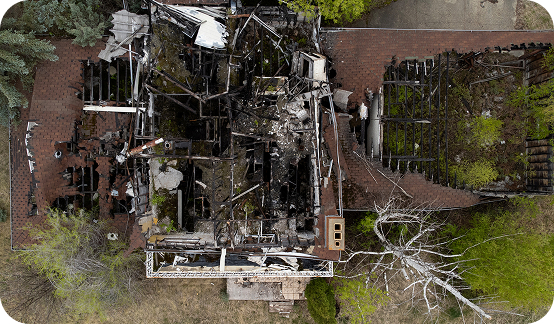
We purchase fire damaged properties across all of Colorado, including:
- Denver Metro — Denver, Aurora, Lakewood, Arvada, Westminster, Thornton, Englewood, and surrounding Jefferson and Adams county communities
- Boulder County — Boulder, Louisville, Superior, Longmont, and the communities most directly affected by the Marshall Fire and continued WUI risk
- Colorado Springs and El Paso County — Colorado Springs, Pueblo, Fountain, and surrounding communities, including areas affected by the Black Forest and Waldo Canyon fires
- Fort Collins and Northern Colorado — Fort Collins, Loveland, Greeley, Windsor, and Larimer and Weld counties
- Mountain Communities — Evergreen, Morrison, Conifer, Bailey, Estes Park, Steamboat Springs, Summit County, and ski resort communities
- Western Slope — Grand Junction, Montrose, Durango, Glenwood Springs, Aspen, and surrounding communities
- Southern Colorado — Pueblo, Alamosa, Trinidad, and the San Luis Valley
We buy single-family homes, townhouses, condos, and vacant lots where structures were destroyed by fire. Wildfire damage, structure fire damage, partial loss, total loss — all considered. If you're not certain whether your property qualifies, just call us.
Why Choose Us
We Only Buy Fire Damaged Properties — and That Makes a Difference
Colorado has many cash home buyers. Most of them handle a wide variety of distressed properties. We don’t — fire damaged homes are our only business, and that specialisation matters when you’re trying to sell a property like yours.
- We understand Colorado's fire landscape — both the dynamics of wildfire in the WUI communities along the Front Range and mountain foothills, and the structural fire patterns in the major urban markets. Our valuations reflect what fire damage actually costs to remediate in Colorado, not a generic discount
- We know Colorado's disclosure framework under C.R.S. § 38-35.7 and the Colorado Real Estate Commission's form requirements. Every transaction we complete is handled correctly from a legal standpoint
- We are the actual buyer on the deed — no contract assignment to a third-party investor. When we make an offer, we are the ones closing the transaction
- We've completed over 500 fire damaged home purchases across the country, including wildfire-damaged properties, structure fire losses, partially rebuilt homes, and condemned properties
- We understand the specific complexity of Colorado wildfire cases — including underinsurance shortfalls, insurance dispute timelines, and the gap between what insurance pays and what a full rebuild actually costs
When you call, you’ll speak with someone who has worked through situations like yours. That experience matters when the situation is complicated.


Common Questions
What Colorado Homeowners
Ask Us Most
Do I have to make any repairs before selling?
No. We buy properties exactly as they are. Don’t spend money on the property before talking to us, don’t clean up the damage, and don’t worry about what it looks like when we visit. That applies to both wildfire damage and structure fire damage.
My home was damaged by the Marshall Fire (or another Colorado wildfire). Can I sell even if I'm still in the insurance process?
Yes. Active insurance claims don’t prevent a sale, though the details of how the claim is settled will need to be factored into the transaction. We’ve worked with homeowners at every stage of the insurance process, including those with unresolved claims or significant underinsurance gaps. A brief call with your insurer can clarify how a sale affects your claim — but it doesn’t prevent you from selling.
I was underinsured. Does that affect what I can get for the property?
Your insurance shortfall is separate from the market value of your property and the land it sits on. In Boulder County and other high-value Colorado markets, even fire-damaged lots have retained significant value. We factor in the land value, the local market, and realistic reconstruction costs to give you an honest offer — not an offer that penalises you for an insurance gap that wasn’t your fault.
Do I have to disclose fire damage even if it was fully repaired before I listed?
Yes. Colorado’s Seller’s Property Disclosure form asks about conditions that now exist or have ever existed. Fire damage history must be disclosed regardless of whether it was repaired. When you sell to us, we handle the disclosure process together as part of the transaction so you’re fully protected.
The property has been condemned or red-tagged. Can I still sell?
Yes. A condemnation notice or red tag from a local authority doesn’t prevent a sale — it’s a disclosure item we’re experienced in handling. We’ve bought condemned properties across Colorado and throughout the country.
Is there any pressure to accept the offer?
None. The evaluation and written offer are completely free and commit you to nothing. Take the time you need. We’ll be here when you’re ready.
Find Out What Your Colorado Property Is Worth — at No Cost
You don’t need to have made any decisions before you call. Most homeowners reach out first just to understand what’s possible — and that conversation is free, clear, and comes with no pressure.
Call us at (800) 267-2360, or fill in your address below and we'll be back in touch within the hour.