

Sell Your Fire Damaged House in
Hawaii
Selling a fire damaged home in Hawaii is unlike selling one anywhere else in the country. Hawaii's fire risk is driven by forces that are unique to the islands — a landscape covered in invasive grasses that burn faster and hotter than almost any fuel in the continental United States, a building stock that is aging faster than it is being replaced, and the enduring aftermath of the August 2023 Maui wildfires, which exposed just how catastrophically underinsured most Hawaii homeowners were when the worst happened.

We Buy Fire Damaged Houses purchases fire damaged properties across all of Hawaii for cash, in as-is condition. No repairs, no listings, no agent commissions. Whether the damage is from a residential structure fire on Oahu, wildfire damage on Maui, a brush fire on the Big Island, or smoke damage on Kauai or Molokai — we buy it as it stands today.
Fire damaged homes are the only properties we buy. We understand Hawaii’s fire landscape, its rebuilding constraints, and its disclosure law in full detail. If you have been struggling with the gap between what insurance paid and what restoration would cost, or simply cannot face a rebuild that could take years and may never be complete, a cash sale may be the cleaner path forward.
Fire Damage In Hawaii
Hawaii's Fire Landscape: A Problem Unlike Any Other State
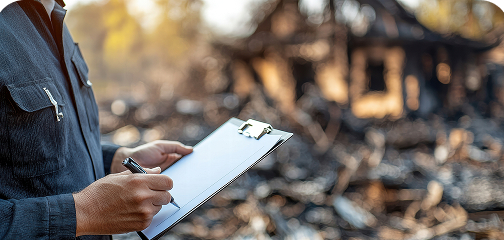
Hawaii is not commonly thought of as a high fire-risk state, but the data tells a different story. Building fires across the state have increased by nearly two-thirds since 2014 — from roughly 3,000 incidents annually to more than 5,000 — with the majority concentrated in Honolulu. The annual area burned by wildfire in Hawaii has increased by 300 percent over recent decades. And the August 2023 Maui wildfires, which killed 102 people and destroyed approximately 2,200 structures in and around Lahaina, made Hawaii’s fire disaster the deadliest the United States had seen in more than a century.
The Invasive Grass Crisis: Hawaii’s Permanent Wildfire Engine
To understand why Hawaii’s wildfire risk is so severe and so different from that of other states, you have to understand the invasive grass problem. Roughly 25 percent of Hawaii’s land area — approximately one million acres — is now covered in non-native, fire-promoting grasses and shrubs. Species like guinea grass, buffelgrass, fountain grass, and molasses grass were introduced over the past two centuries as cattle pasture or ornamental plants. When Hawaii’s sugar and pineapple plantation industries collapsed in the 1990s and 2000s — Hawaii’s last sugar cane plantation closed in 2016 — millions of acres of previously managed agricultural land were abandoned. With no grazing or management to keep them in check, these invasive grasses spread rapidly across the leeward, low-elevation landscapes of every major island.
These grasses are not merely flammable — they are fire-adapted. They dry out fast during drought, they ignite easily, and when they burn they do so at speeds that Native Hawaiian ecosystems never evolved to withstand. Fountain grass rates at 0.99 on a fire susceptibility scale of 0 to 1, according to the University of Hawaii’s Weed Risk Assessment database. Guinea grass can grow six inches in a single day during the wet season and reach ten feet tall, creating an enormous fuel load that dries out completely during drought. The annual area burned by wildfire in Hawaii is dominated by these non-native grasslands — more than 80 percent of the acreage burned in Hawaii each year burns in non-native grass. According to fire ecologist Clay Trauernicht of the University of Hawaii, the annual area burned has increased by 300 percent in recent decades, and the fundamental cause is “vast extents of non-native grasslands left unmanaged as we’ve entered a post-plantation era.”
The 2023 Lahaina Fire: What It Revealed About Hawaii’s Fire Reality
On August 8, 2023, four wildfires broke out on Maui in a single day. The most devastating struck the historic town of Lahaina on the western coast, where a pressure system to the north and Hurricane Dora passing to the south created downslope wind gusts reaching 67 to 80 miles per hour. Those winds, combined with drought conditions affecting more than a quarter of Maui County and the dense invasive grass surrounding Lahaina, drove a fire that destroyed approximately 81 percent of the town’s structures. The total insured losses reached $3.4 billion. The global settlement against Hawaiian Electric Industries, Maui County, and others reached more than $4 billion. One hundred and two people died — the deadliest US wildfire in over a century, and Hawaii’s deadliest natural disaster since Hurricane Iniki in 1992.
The Lahaina fire also exposed something that went beyond the disaster itself: nearly every homeowner in the burn zone was significantly underinsured. An insurance executive overseeing more than 1,000 claims told ABC News that, on average, Lahaina policyholders needed 40 percent more than their insured amount to cover the cost of rebuilding. At $350 to $400 per square foot for new construction on Maui, even policyholders who had good coverage found themselves hundreds of thousands of dollars short. Two years after the fire, as of December 2025, only around 100 structures had been rebuilt out of the approximately 2,200 destroyed. The rebuilding that has occurred has required homeowners to use retirement savings, take SBA loans, and rely on nonprofit assistance to bridge insurance gaps that in some cases exceeded $400,000.
The Sprinkler Prohibition: A Structural Fire Risk That Compounds the Problem
One factor that makes Hawaii’s structure fire risk higher than it should be is a state law that most people are unaware of: Act 83, passed by the Hawaii Legislature in 2012, prohibits counties from requiring the installation of fire sprinklers in new residential construction. The State Fire Council has repeatedly attempted to have this law repealed, and continues to advocate for mandatory residential sprinklers, but as of the time of this writing the prohibition remains in force. Hawaii’s housing stock has a median age of 46 years — among the oldest in the country — and many properties lack the fire protection systems that newer construction in other states is required to include. This is a documented, ongoing risk that affects property values and habitability across every island.
Understanding Your Options
Repair and Sell — or Sell As-Is?

Path 1: Repair and Rebuild

Restoring a fire damaged property in Hawaii is among the most expensive and logistically difficult construction projects in the United States. New construction on Maui is currently running $350 to $400 per square foot, and the regulatory environment adds layers of cost and time that have very few parallels anywhere in the country. Before permits can even be issued in many parts of Maui and Oahu, debris removal, hazardous materials remediation, and environmental review are required. Maui County’s permitting process, which ran to more than 200 days before the Lahaina fire, has been reduced to around 70 days at the Recovery Permitting Center — but that improvement applies specifically to the Lahaina burn zone, and the broader permitting environment across Hawaii remains challenging.
For many homeowners, the deeper problem is financial. If your insurance payout falls short — and for most Hawaii fire victims, it does, often by hundreds of thousands of dollars — bridging that gap requires navigating SBA loans, philanthropic grants, federal disaster aid programs, and community land trusts, each with their own timelines, eligibility requirements, and conditions. Many Lahaina homeowners who had strong intentions to rebuild have concluded, two years later, that the path is not viable for them. Selling to a cash buyer gives them access to their equity now, without years of uncertainty.
Path 2: Sell As-Is to We Buy Fire Damaged Houses

We buy the property exactly as it is today. We evaluate the damage, the local market on your specific island and in your specific community, Hawaii’s construction cost environment, and the regulatory context — and provide a written cash offer. Once you accept, we handle everything. Most transactions close within seven to fourteen days. No commissions, no closing costs charged to you, and no waiting for grant programs or permit queues to clear. If you need to move forward now, a cash sale can make that possible.

Hawaii Legal Requirements
What You Need to Know Before Selling a Fire Damaged Home in Hawaii
Hawaii has one of the most clearly defined and seller-protective residential disclosure frameworks in the United States. Understanding what it requires — and what its specific mechanics mean for sellers of fire damaged properties — is important before you enter any transaction.
HRS Chapter 508D: Mandatory Written Disclosure
Hawaii Revised Statutes Chapter 508D establishes a mandatory seller disclosure requirement for all residential real property transactions. Unlike Georgia, which has no required disclosure form, or Florida, where disclosure obligations arise primarily from case law, Hawaii’s framework is statutory and explicit: sellers must provide a written disclosure statement that fully and accurately discloses all material facts relating to the property being offered for sale.
Under HRS 508D-1, a “material fact” is defined as “any fact, defect, or condition, past or present, that would be expected to measurably affect the value to a reasonable person of the residential real property being offered for sale.” The phrase “past or present” is critical. Prior fire damage — even if the fire occurred years ago and was repaired — is a past condition that would measurably affect value to a reasonable buyer. It must be disclosed. The disclosure obligation covers facts within the seller’s knowledge or control, and facts observable from visible, accessible areas of the property.
The 15-Day Rescission Window
Under HRS 508D-5, after the seller delivers the disclosure statement, the buyer has 15 calendar days to examine it and, if the buyer chooses, to rescind the purchase contract in writing. All deposits are returned in full if the buyer exercises this right in time. This rescission window means that an incomplete or inaccurate disclosure statement — one that fails to mention fire damage that the buyer subsequently discovers — creates significant exposure for sellers. A buyer who discovers undisclosed fire damage has a clear statutory remedy: contract rescission and return of deposits, or legal action for damages under HRS 508D-16.
What Hawaii Sellers May Exclude
HRS 508D-8 identifies a narrow set of facts that sellers may exclude from the disclosure statement: that an occupant had AIDS or was tested for AIDS, and that the property was the site of an act or occurrence that had no effect on the physical structure or environment. That second exclusion is sometimes misread as a broader exemption than it actually is. Fire damage has a direct and permanent effect on the physical structure of the property — charred framing, compromised electrical systems, smoke contamination in walls and insulation, potential foundation damage. None of these fall within the exclusion. Fire damage is not excludable from disclosure under any provision of HRS Chapter 508D.
Later-Discovered Material Facts: The Amendment Obligation
HRS 508D-13 adds another layer that is particularly relevant in Hawaii’s post-Lahaina environment: if new information comes to light after the disclosure statement is delivered that makes the original disclosure inaccurate regarding a material fact, the seller is required to provide an amended disclosure statement. The buyer then has another 15-day window to examine the amended disclosure and, if not previously aware of the new information, to rescind. For sellers of wildfire-damaged properties who are still receiving insurance and engineering assessments, this amendment obligation means disclosure is not a one-time event — it is an ongoing duty through closing.
How It Works
Clear. Simple. On Your Schedule.

Free Property Evaluation
Call us or enter your property address using the form below. We can arrange a site visit on your island at a time that works for you, and we work with remote evaluations as well for properties where travel logistics are a constraint. No cost and no obligation. Don’t prepare or clean the property. We evaluate fire damaged properties in their current state regularly, and we’ve worked with damage profiles ranging from minor smoke contamination to complete structural loss.

A Written Cash Offer Within 24 Hours
After the assessment, we provide a written offer and explain exactly how we arrived at it — the comparable sales on your specific island, the current construction cost environment in your market, the insurance situation if it is unresolved, and what the property is worth today. If the situation is complex — a property that was in a wildfire burn zone, has open litigation as part of a larger settlement, or carries title complications from the disaster period — we know how to evaluate it.

Close When You're Ready
We can close in as few as seven days if you need to move quickly, or accommodate a longer timeline if your situation requires it. No fees on our side. You receive the full offer amount at closing.
Where We Buy In Hawaii
All Islands — Oahu to the Big Island
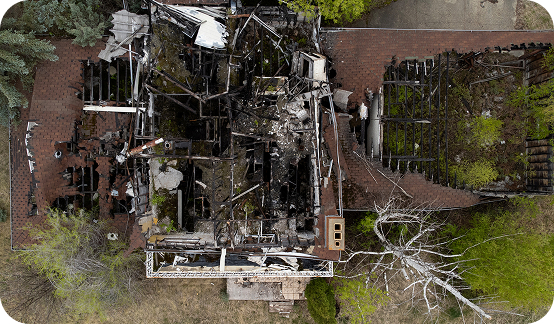
We purchase fire damaged properties across all of Hawaii, including:
- Maui County — Lahaina and West Maui, Kihei and South Maui, Central Maui including Wailuku and Kahului, Upcountry Maui including Kula and Makawao, and East Maui including Hana. We are fully familiar with the post-2023 rebuild environment, the Lahaina Recovery Permitting Center process, and the insurance landscape facing West Maui homeowners
- Oahu / City and County of Honolulu — Honolulu, Kailua, Kaneohe, Pearl City, Aiea, Mililani, Waipahu, Ewa Beach, Kapolei, the North Shore, and all communities across the island. Oahu accounts for the majority of Hawaii's structure fire incidents, and we work in all of its markets
- Hawaii Island / Big Island — Kailua-Kona, Hilo, Waimea/Kamuela, Captain Cook, Pahoa, and the communities across the island's diverse regions. Big Island has significant wildfire risk on its dry western and southern slopes, including the 2021 Mana Road fire that burned 42,000 acres of non-native grassland
- Kauai — Lihue, Kapaa, Princeville, Hanalei, Poipu, and communities across the island
- Molokai and Lanai — We buy in the smaller island communities as well
We buy single-family homes, condominiums and townhouses, multi-family properties, and vacant lots where structures have been destroyed by fire. Wildfire damage, structure fire damage, smoke damage, and properties in legally complex post-disaster situations are all considered. If you are uncertain whether your property qualifies, call us.
Why Choose Us
We Only Buy Fire Damaged Properties
Hawaii has a small but active market for cash home buyers. Most handle all kinds of distressed properties. We don’t — fire damaged homes are the only properties we buy, and that focus matters when you are dealing with a situation as specific and as complicated as fire damage in Hawaii.
- We understand Hawaii's fire landscape in full — the invasive grass problem driving wildfire risk across the leeward coasts of every major island, the post-Lahaina rebuild environment on Maui, the structure fire patterns on Oahu, and the Big Island's specific dry-side wildfire risk
- We are fully familiar with HRS Chapter 508D — the mandatory written disclosure requirement, the 15-day rescission window, the amendment obligation for later-discovered material facts, and the narrow exclusions that do not cover fire damage
- We understand the underinsurance crisis facing Hawaii homeowners. Many sellers we work with have received insurance payouts that fall significantly short of rebuild costs, and a cash sale offers a way to access what equity remains without waiting years for a rebuild program to materialise
- We are the actual buyer on the deed — no contract assignment to an unknown third party. When we make an offer, we are the ones closing the transaction
- We've completed over 500 fire damaged home purchases nationwide, including complex Hawaii situations involving open litigation from large wildfire events, properties with insurance settlement complications, and structures declared non-conforming under post-fire zoning review
When you call, you’ll speak with someone who has worked through situations like yours. Hawaii’s fire damage landscape is unlike anywhere else in the country, and the person you speak with understands that.


Common Questions
What Hawaii Homeowners
Ask Us Most
Do I need to make any repairs or clean up before selling?
No. We buy properties in their current condition — fire damage, smoke damage, debris, structural compromise, and all. Don’t spend money preparing the property before talking to us. We evaluate it as it is and price the offer accordingly.
My home is in the Lahaina burn zone and I'm still part of the lawsuit settlement. Can I still sell?
Yes. Many homeowners in the Lahaina burn zone have sold or are in the process of selling while the global settlement is still being distributed. A property sale does not automatically extinguish your rights as a plaintiff in the settlement — those are typically assigned to or acknowledged by your attorney. We are familiar with the specific legal environment around the Maui wildfire litigation and can work through the structure of your situation. This is a question worth discussing with your attorney as well before any transaction closes.
My insurance paid out far less than I need to rebuild. Does that affect the offer?
No — the insurance situation does not affect your ability to sell, and your insurance payout is separate from the transaction. We evaluate the property’s current fair market value as damaged real estate on the relevant island, independent of what was or wasn’t covered by insurance. If there is a lender holding insurance proceeds in escrow, that is something to discuss with your lender before closing, but it does not prevent a sale.
Does Hawaii law really require me to disclose fire damage that happened before I owned the property?
Yes, if you are aware of it. Hawaii’s HRS 508D-1 requires disclosure of material facts “past or present” — meaning historical fire damage that you became aware of through disclosure from a prior seller, home inspection, property records, or any other means must be disclosed if it would measurably affect value to a reasonable buyer. If prior fire damage was fully remediated with no remaining structural impact, the calculus is different, but this is a judgment that benefits from careful consideration and, in complex situations, legal advice.
The property was condemned or red-tagged after a fire. Can I still sell it?
Yes. Condemned or red-tagged properties are among the types of properties we regularly purchase. The condemnation does not prevent a sale — it affects what the property can be used for in its current state and is a factor we account for in the offer. We are fully aware of what a condemnation means on each island and county, and we have experience completing transactions in these circumstances.
Is there any obligation if I get an offer?
None. The evaluation and the written offer are completely free and commit you to nothing. Take all the time you need. We will be here when you are ready.
Find Out What Your Hawaii Property Is Worth — at No Cost
Whether the damage is minor smoke contamination or total structural loss, whether it happened last year or before you owned the property, and whether the insurance and legal situation is resolved or still open — a free evaluation costs you nothing and takes about ten minutes.
Call us at (800) 267-2360, or fill in your address below and we'll be back in touch within the hour.