

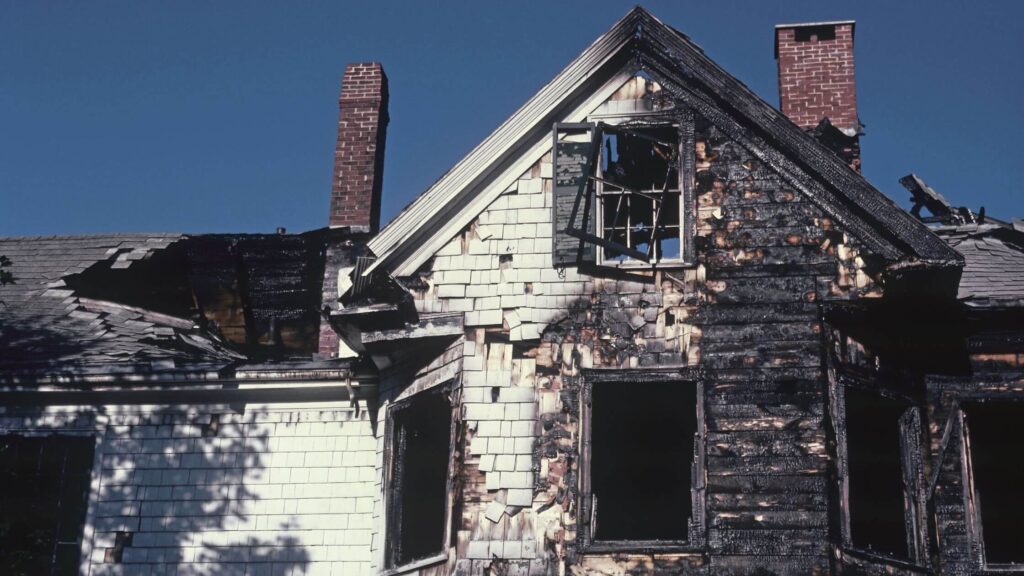
Inheriting property should provide financial benefit or sentimental connection to a loved one’s legacy. Instead, inheriting a fire-damaged house creates an immediate burden – legal complexities, financial obligations, emotional stress, and difficult decisions about a property you never chose to own. Understanding your options for handling inherited house fire damage, navigating the probate process, and making informed choices helps you resolve this unwanted situation efficiently. Whether you choose to rebuild, sell inherited burnt house as-is, or pursue other solutions, knowing the implications of each path protects your interests and honors your inheritance appropriately.
Unique Challenges of Fire Damage Probate Home Situations
Inherited fire-damaged properties combine two complex situations – estate settlement and fire damage – creating compounded challenges most heirs aren’t prepared to handle.
Legal Complications
Fire damage probate home cases involve navigating estate law while simultaneously addressing property damage. You must establish legal ownership through probate before you can make decisions about the property, deal with insurance claims that may predate your ownership, address liens or mortgages the deceased left behind, and coordinate with other heirs if multiple people inherited the property.
Probate timelines vary by state but typically take 6-12 months. During this period, you’re responsible for the property but may have limited authority to act, creating a frustrating limbo where problems compound while you wait for legal clearance.
Financial Burdens
The moment you inherit, financial obligations begin accumulating. Property taxes continue whether the house is habitable or not. If a mortgage exists, payments must continue or the property faces foreclosure. Insurance premiums are due even on fire-damaged structures. Utilities, security costs, and maintenance to prevent further deterioration all require ongoing payments.
Many heirs discover they’re funding a property they don’t want and can’t use while waiting months for probate to complete. One heir we worked with spent $18,000 maintaining an inherited burnt house during probate – money they never recovered.
Emotional Complexity
Inheriting property connects to grief over losing a loved one. Fire damage adds trauma to an already emotional situation. Some heirs feel obligated to restore the property as a way of honoring the deceased, even when financially impractical. Others face family conflict when multiple heirs disagree about whether to rebuild or sell. The pressure to make “the right decision” while grieving creates significant stress.
Multiple Heir Complications
When siblings or other relatives co-inherit a fire-damaged property, unanimous agreement on next steps is rarely easy. One heir may want to rebuild for sentimental reasons while another needs immediate cash. Disagreements about property value, repair costs, and best options create family conflict during already difficult times.
Legal requirements for unanimous consent on major decisions can paralyze the process when heirs can’t agree, leaving the damaged property deteriorating while family members argue.
Your Options for Inherited House Fire Damage
You have several paths forward, each with distinct advantages, disadvantages, and requirements.
Option 1: Rebuild and Keep the Property
How it works: Use insurance proceeds or personal funds to restore the fire-damaged inherited house, then either live in it, rent it, or hold it as an investment.
Advantages:
- Preserves family legacy and connection to the deceased
- Maintains property in the family for future generations
- Provides housing or rental income after restoration
- Potentially increases property value if market appreciates
Disadvantages:
- Requires 6-12+ months for complete restoration
- Costs $50,000-$250,000+ depending on damage severity
- Demands significant time managing contractors and decisions
- Out-of-pocket expenses for deductibles, depreciation gaps, and code upgrades
- Insurance may not cover full reconstruction costs
- Ongoing financial obligations during lengthy rebuilding process
- Risk of cost overruns and hidden damage discoveries
Best for:
- Heirs with strong emotional attachment to the property
- Those with financial resources to cover reconstruction costs
- People planning to live in or rent the property long-term
- Situations where insurance fully covers restoration
- Single heirs with decision-making authority
What to consider: makes sense only when insurance coverage is adequate, you have time and resources to manage the project, and you actually want to own the property long-term. Don’t rebuild out of guilt or obligation – make decisions based on practical and financial reality.
Option 2: Rebuild and Sell
How it works: Restore the fire-damaged property to sellable condition, then list it on the traditional market for maximum value.
Advantages:
- Potentially highest financial return compared to as-is sale
- Easier to sell through traditional real estate channels
- Appeals to conventional buyers who can’t envision past damage
- May honor the deceased’s wishes if they wanted the home preserved
Disadvantages:
- Requires upfront investment of $50,000-$250,000+ for restoration
- 12-18+ month timeline from fire to final sale (6-12 months rebuilding + 3-6 months selling)
- Risk that post-restoration sale price doesn’t justify reconstruction costs
- Must disclose fire history even after complete restoration, which affects buyer pool
- Carrying costs for taxes, insurance, and mortgage during entire process
- Real estate commissions (6%) reduce net proceeds
- No guarantee the property will sell quickly or at expected price
Best for:
- Heirs with capital to fund reconstruction upfront
- Properties in strong markets where rebuilt value significantly exceeds as-is value
- Situations with comprehensive insurance coverage
- Those willing to wait 12-18+ months for final proceeds
What to consider: Calculate carefully whether rebuilding before selling makes financial sense. If as-is value is $150,000, reconstruction costs $180,000, and post-restoration value is $350,000, you net $170,000 after a year of effort. Compare this to $150,000 immediate cash from as-is sale – is the extra $20,000 worth 12-18 months of work, risk, and carrying costs?
Option 3: Sell the Inherited Burnt House As-Is
How it works: Sell the fire-damaged property in its current condition to a cash buyer or investor without making any repairs.
Advantages:
- Immediate resolution (7-10 days from decision to cash in hand)
- Zero out-of-pocket costs for repairs or reconstruction
- No project management, contractor coordination, or decision-making
- Eliminates ongoing financial drain from taxes, insurance, and maintenance
- Provides certainty about proceeds without market risk
- Avoids family conflict over reconstruction decisions
- Keeps insurance proceeds (if any) plus receives sale payment
- No real estate commissions or traditional selling costs
- Can proceed even during probate in many cases with proper documentation
Disadvantages:
- Lower sale price than post-restoration value
- May feel like “giving up” on family legacy
- Less competitive process than traditional market sale
- Some family members may disagree with decision
Best for:
- Heirs who don’t want the property or can’t afford reconstruction
- Multiple heirs needing quick estate settlement
- Properties with inadequate insurance coverage
- Heirs living far from the inherited property
- Those facing financial pressure from carrying costs
- Anyone wanting immediate closure rather than year-long projects
What to consider: Selling inherited burnt house as-is provides the fastest path to resolution with zero financial risk or effort required. While you receive less than post-restoration value, you avoid all costs, risks, and time associated with rebuilding. For most heirs dealing with unwanted fire-damaged property, this option makes the most practical and financial sense.
Option 4: Donate or Demolish
How it works: Donate the fire-damaged property to charity for a tax deduction, or pay for demolition and sell the empty lot.
Advantages:
- Charitable donation provides tax deduction (though limited for damaged property)
- Demolition creates clean lot that sells more easily
- Removes eyesore and liability from the estate
Disadvantages:
- Demolition costs $8,000-$15,000+ with no guarantee lot sale recoups costs
- Tax deduction for damaged property is minimal
- Still requires probate completion before action
- May net less than as-is sale to investors who handle demolition
Best for:
- Properties with extreme damage and minimal remaining value
- Heirs prioritizing speed over maximum financial return
- Situations where charitable giving aligns with the deceased’s wishes
What to consider: This option rarely makes financial sense compared to selling as-is to cash buyers who handle demolition themselves and still pay for the property.
Navigating the Fire Damage Probate Home Process
Understanding probate requirements helps you move forward efficiently regardless of which option you choose.
Establishing Authority
Before you can sell, rebuild, or donate, you must establish legal authority over the property. This typically requires opening probate, being appointed executor or administrator, obtaining court approval for major decisions (in some jurisdictions), and ensuring all heirs are properly notified and involved.
Work with a probate attorney to navigate state-specific requirements. Some states allow expedited processes for smaller estates that can reduce timeline from 12 months to 3-6 months.
Insurance Claims
If the fire occurred before or shortly after death, insurance claims add complexity. The deceased may have filed claims you need to pursue, or you may need to file as the new owner. Insurance companies sometimes dispute claims during ownership transitions, and proceeds may be paid to the estate rather than directly to heirs.
Work with the insurance company to clarify claim status, understand coverage amounts, and determine how proceeds will be distributed. Document everything in writing.
Clear Title Issues
Fire-damaged properties sometimes have title complications including unpaid property taxes creating liens, mortgage balances exceeding property value, mechanic’s liens from contractors hired by the deceased, or judgments against the estate.
A title search reveals these issues early so you can address them before attempting to sell or rebuild.
Coordinate with Co-Heirs
If you inherited with siblings or other relatives, establish clear communication and decision-making processes early. Consider mediation if disagreements arise, get all agreements in writing, and understand that major decisions typically require unanimous consent.
One heir can’t unilaterally decide to rebuild or sell without other heirs’ agreement in most situations.
Why Selling As-Is Makes Sense for Most Heirs
After working with dozens of heirs facing inherited house fire damage, we’ve found that selling as-is provides the best outcome in most situations. Here’s why:
Speed matters when you’re paying for a property you don’t want. Every month of probate, reconstruction, or traditional selling means more money lost to taxes, insurance, and maintenance. Selling as-is stops the financial bleeding immediately.
Inherited property rarely justifies the effort of rebuilding. If you don’t plan to live there, the 12-18 month investment of time and money for marginal financial gain over as-is sale doesn’t make sense.
Family conflict dissolves when you remove the source. Multiple heirs rarely agree on reconstruction decisions, timelines, or contractor choices. Selling as-is eliminates months of family tension.
You can’t rebuild what you don’t want to own. Many heirs feel obligated to restore the property out of respect for the deceased. But honoring someone’s memory doesn’t require taking on crushing financial burdens or year-long projects you’re not equipped to handle.
Certainty beats optimism. Rebuilding gambles that post-restoration value will justify costs and effort. Market changes, cost overruns, and hidden damage frequently disappoint. As-is sales provide guaranteed proceeds without risk.
How We Help Heirs Handle Fire-Damaged Inherited Property
We specialize in purchasing fire-damaged inherited properties, understanding the unique legal and emotional challenges heirs face.
We work within probate timelines. Our team understands probate requirements and works with executors and attorneys to structure sales that satisfy court requirements and timelines.
We handle title issues. Outstanding mortgages, liens, and other encumbrances don’t prevent sales – we work through them as part of the purchase process.
We coordinate with multiple heirs. When several people inherited together, we provide clear documentation and communication that helps everyone understand and agree to the sale.
We close quickly. Once probate permits sale, we close in 7-10 days, ending your financial obligations and providing immediate proceeds.
We pay fair prices. Our offers account for location, lot value, and remaining structure without the lowball tactics some buyers use against desperate heirs.
Learn more about how it works on our process page, or review our FAQ for common questions about inherited property sales.
Making Your Decision
Choosing how to handle inherited house fire damage depends on your specific circumstances, financial situation, emotional attachment, and practical constraints.
Choose rebuilding if:
- You want to live in or rent the property long-term
- Insurance fully covers restoration costs
- You have 12-18 months to manage the project
- All heirs unanimously support rebuilding
- Strong emotional connection justifies the effort
Choose selling as-is if:
- You don’t want to own the property
- Insurance coverage is inadequate for full restoration
- You need to settle the estate quickly
- Multiple heirs disagree on next steps
- Carrying costs are creating financial hardship
- You live far from the inherited property
For most heirs, selling the inherited burnt house as-is provides the fastest, simplest, and most financially sound resolution to an unwanted burden.
We’re Here to Help
Inheriting a fire-damaged property is challenging enough without adding months of stress, financial drain, and difficult decisions. We buy fire damaged houses including inherited properties in any condition.
Contact us for a no-obligation assessment of your inherited fire-damaged property. We’ll explain exactly what selling would look like, answer questions about probate coordination, and provide a fair cash offer with no pressure to accept.
Whether you ultimately rebuild, sell to us, or pursue another option, we’re happy to provide honest guidance about your situation. You’re dealing with enough grief and complexity – let us make at least one part of the process simple.
Previous