

If you are renting a property and wondering whether your landlord is obligated to provide a fire extinguisher, the honest answer is: it depends on where you live, what type of property you are in, and which fire code your jurisdiction follows. There is no single nationwide rule. What exists instead is a framework of national standards and local codes that produce very different requirements depending on your state, city, and building type.
This guide tells you exactly how the law works, what the most common requirements look like, and what to do if your landlord is not required to provide one but you still want protection.
The National Framework: What NFPA and IFC Actually Say
Two national standards govern fire extinguisher requirements in the United States, and understanding both matters before looking at your specific situation.
NFPA 1 casts the widest net, requiring extinguishers in nearly all occupancies except one and two-family dwellings. A common misconception is that NFPA 10 dictates where extinguishers must be installed. In reality, NFPA 10 contains requirements on how extinguishers are selected, installed, inspected, maintained, and tested. The question of where they are required is answered by codes such as NFPA 1 or the applicable building or fire code in your jurisdiction.
There are two standards for fire protection in the United States, the NFPA and the IFC. The IFC standard is slightly stricter and requires extinguishers inside dwelling units. Different cities in the same state may have somewhat different requirements for fire extinguishers.
The practical result of this dual-standard framework is significant variation. A tenant in a four-unit apartment building in one city may have an extinguisher in their unit by law. A tenant in an identical building one county over may have nothing provided at all.
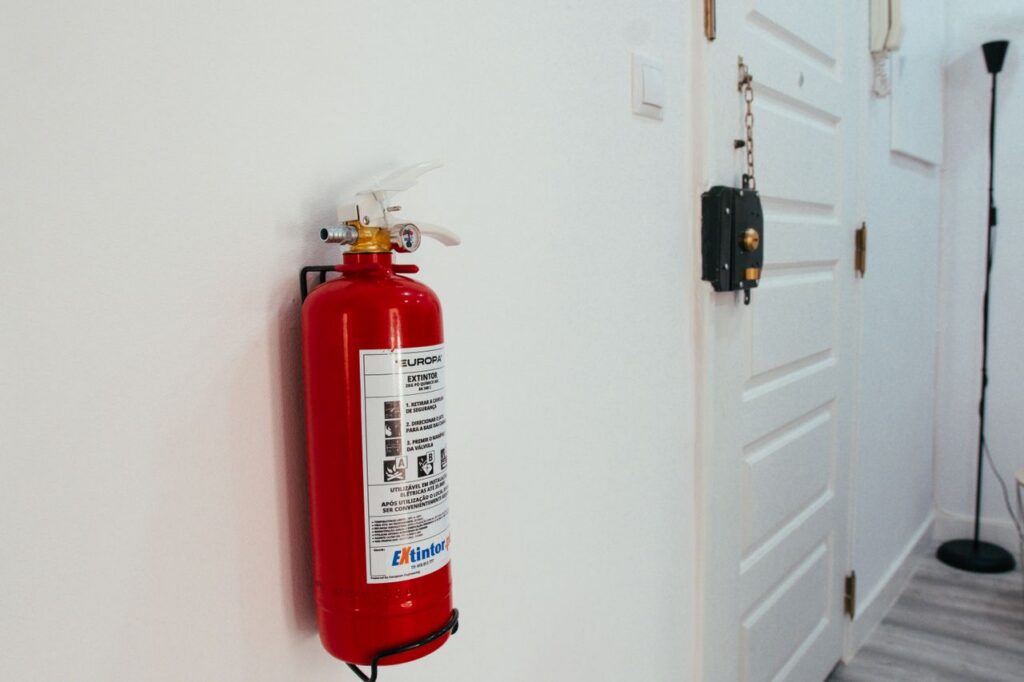
Are Landlords Required To Provide Fire Extinguishers
The answer breaks down by property type.
Single-Family and Two-Family Rentals
Landlords do not usually have to provide extinguishers for single and two-family properties. NFPA 1 explicitly exempts one and two-family dwellings from its extinguisher requirements. If you are renting a house or half of a duplex, your landlord is almost certainly not legally required to provide a fire extinguisher under national standards. Local ordinances can add requirements beyond this, but in most jurisdictions they do not for this property type.
Multi-Unit Properties
Most states require landlords to provide fire extinguishers in multi-unit properties with more than two units. Some states require fire extinguishers only in common areas, while others require them both in common areas and inside dwelling units.
The distinction between common area placement and in-unit placement matters practically. A fire extinguisher mounted in a hallway outside your apartment is available to you, but it requires leaving your unit, potentially through smoke, to retrieve it. An in-unit extinguisher near your kitchen exit is accessible from the moment you need it.
Some jurisdictions give landlords a choice. In Minnesota, for example, all apartment houses with four or more units must be equipped with fire extinguishers by state law, but landlords can choose between placing one extinguisher in each apartment unit or placing one or more extinguishers in each hallway within 50 feet of each apartment entrance.
State-Specific Examples
Requirements vary significantly from state to state. A few examples from the data:
Georgia: Your landlord is required to provide a fire extinguisher in either the common areas of your apartment complex or in your apartment unit.
Oregon: Section 901.6 of the Oregon Fire Code requires portable fire extinguishers in R-2 occupancies, which covers occupancies containing sleeping units or more than two dwelling units where the occupants are primarily permanent in nature. If you are renting to more than two tenants, you will need to install at least one fire extinguisher on the premises.
Texas: In Texas, there is no statewide legislation that specifically requires landlords to provide fire extinguishers in their rental properties. However, landlords still have to comply with state fire safety and property codes, and the San Antonio Fire Prevention Code requires fire extinguishers in multi-family housing rental properties, short-term rentals, and buildings with shared or common areas.
Missouri: In Missouri, there is no statewide fire code, which means there are no set requirements for fire prevention including fire extinguishers. However, individual jurisdictions in Missouri may have set requirements.
The consistent pattern: multi-unit properties are more likely to have requirements, single-family rentals are rarely covered by law, and local codes add specificity that state law often does not.
How To Find Out What Applies to Your Property
The fastest and most reliable approach is to contact your local fire department or building department directly and ask two questions: what type of occupancy is your building classified as, and what does the local fire code require for that occupancy type. Most departments answer this quickly.
You can also check your lease. Some landlords include fire extinguisher provisions in the lease that go beyond what the law requires. If the lease states an extinguisher will be provided and maintained, that is a contractual obligation regardless of what the law requires.
If Your Landlord Is Not Required To Provide One
If the law does not require your landlord to provide a fire extinguisher and they have not done so voluntarily, the responsibility falls to you. This is not unusual, particularly in single-family rentals and two-family properties, and it is a straightforward problem to solve.
What to get:
An ABC-rated dry chemical extinguisher is the right choice for a residential rental. It covers Class A fires involving ordinary combustibles, Class B fires involving flammable liquids, and Class C electrical fires, the three most common residential fire types. A 5-pound unit is the practical choice for most interior rooms, light enough to handle quickly and powerful enough to be effective on a contained fire.
For the kitchen specifically, a 2.5-pound BC or K-rated extinguisher near the exit, in addition to an ABC unit, covers the grease fire scenario that a dry chemical extinguisher handles less effectively.
Where to put it:
Mount near the exit of the room, not adjacent to the most likely fire source. In the kitchen, near the door to the hallway or outside, not above or next to the stove. In the bedroom, near the door. The logic is the same in every room: you need to be able to grab it while moving toward safety, not while moving toward the fire.
For a complete guide to sizing, type selection, and room-by-room placement, choosing the right fire extinguisher for your home covers everything a renter needs to make the right decision without overspending.
What it costs:
A quality 5-pound ABC extinguisher costs $25 to $60 at most hardware stores. A 2.5-pound kitchen unit runs $20 to $40. For under $100 you can have comprehensive extinguisher coverage in your rental unit regardless of what the law requires your landlord to provide.
What Landlords Are Required To Maintain
Where extinguishers are legally required, the landlord’s obligation does not end at installation.
NFPA standards outline specific maintenance guidelines for fire extinguishers to ensure they remain functional and effective. This includes monthly inspections to ensure that the extinguisher is in the right place and has not been tampered with. Landlords should also have a qualified professional perform annual maintenance checks to ensure the extinguishers are operating correctly.
If your building’s extinguishers have a pressure gauge in the red zone, visible damage, a missing safety pin, or a last inspection date that is more than a year old, report it to your landlord in writing. A documented request creates a record of your notification and their response, which matters if there is ever a fire and the equipment failed.
What Renters Should Have Regardless of the Law
Even in jurisdictions where landlords are legally required to provide extinguishers, relying entirely on that provision has limits. A common area extinguisher requires leaving your unit to retrieve it. An extinguisher provided by the landlord may not have been inspected on schedule. And in a single-family rental where no legal requirement exists, you may have no extinguisher at all unless you provide one yourself.
Fire safety in a rental unit is not only the landlord’s problem. As a tenant, your ability to respond in the first 30 to 60 seconds of a fire determines whether it stays contained. The Kansas State Fire Marshal recommends that each rental unit be equipped with a fire extinguisher or automatic sprinkler system, and that tenants take personal responsibility for understanding its use regardless of what the law requires. The landlord cannot provide that response. You can, with a $30 extinguisher mounted near the kitchen door.
Beyond the extinguisher, the other question renters should ask is whether the smoke detectors in the unit are functional, properly placed, and within their 10-year service life. For everything you need to know about detector placement, types, and the most common installation mistakes, smoke detector installation is the most complete resource we have put together on the subject.
Final Thoughts
Whether your landlord is required to provide a fire extinguisher depends on your property type, your state, and your local fire code. Single-family and two-family rentals are almost never covered by law. Multi-unit properties are more commonly required to have extinguishers in common areas or inside units, depending on the jurisdiction.
If the law does not cover your situation and your landlord has not provided one, the solution is straightforward and inexpensive. A 5-pound ABC extinguisher costs less than a dinner out, takes five minutes to install, and is the most direct investment you can make in your own fire safety regardless of what your lease says.
Previous