

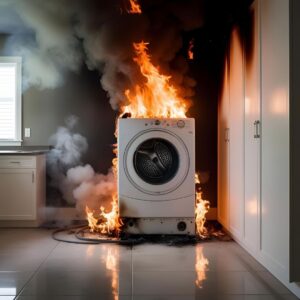
Dryers are essential household appliances that most people use multiple times weekly without a second thought. But can dryers catch on fire? Absolutely – and they do so with alarming frequency. The U.S. Fire Administration reports that dryers and washing machines cause an estimated 15,970 home fires annually, resulting in approximately 13 deaths, 440 injuries, and $238 million in property damage. Understanding what causes dryer fires and how to prevent them protects your home, family, and financial security from this common but often overlooked fire hazard.
How Common Are Dryer Fires?
Dryer fires are disturbingly common. According to the National Fire Protection Association (NFPA), dryers and washing machines accounted for one in every 22 home fires between 2010-2014. These aren’t isolated incidents – dryer fires happen in homes across America every single day.
Peak fire season runs from January through March when cold weather increases dryer usage. However, dryer fires occur year-round wherever these appliances operate.
Location matters. While dryers cause fires in all settings, the risk increases in:
- Homes with dryers in basements or enclosed laundry rooms where vents accumulate lint unnoticed
- Multi-family buildings where shared venting systems compound lint buildup
- Older homes with lengthy, poorly configured vent runs
- Properties where dryers run unattended for extended periods
The frequency of dryer fires makes them a leading cause of household fires, ranking alongside cooking equipment and heating systems. As detailed in our guide on where do most house fires start, laundry rooms account for 6% of all home fires, with dryers as the primary culprit.
What Causes Dryer Fires: The Primary Factors
Understanding what causes a dryer fire reveals that most incidents stem from preventable maintenance failures rather than appliance defects.
1. Lint Accumulation (Leading Cause – 34% of Dryer Fires)
Lint is extremely flammable. The fine, dry fibers that accumulate from clothing ignite easily and burn intensely. When lint builds up in dryer vents, exhaust ducts, and inside the dryer cabinet itself, it creates a fuel source waiting for an ignition point.
How lint causes fires:
- Lint restricts airflow in vents, causing the dryer to overheat
- Overheating ignites lint accumulation inside the dryer cabinet near heating elements
- Flames spread rapidly through lint-filled vent ducts
- Fire extends from vent systems into wall cavities and attics
Where lint accumulates:
- Lint trap/screen (most obvious location)
- Behind and beneath the dryer
- Inside the dryer cabinet around the drum and heating element
- Throughout the entire vent duct from dryer to exterior
- At the exterior vent opening where lint clogs the hood
The insidious nature of lint accumulation is that it happens gradually. Homeowners don’t notice dangerous buildup until airflow restriction becomes severe or fire occurs.
2. Failure to Clean the Lint Filter
27% of dryer fires result from failure to clean lint filters. The lint trap should be cleaned before every single load, yet many people clean it sporadically or only when they notice reduced drying efficiency.
A clogged lint filter forces hot, moist air to find alternative paths through the dryer. This redirected airflow pushes lint deeper into the dryer cabinet where it accumulates near heating elements. When enough lint builds up, the heating element’s temperature ignites it.
3. Improper Dryer Vent Installation and Configuration
Vent material matters. Flexible plastic or foil venting is a fire hazard. These materials:
- Sag and trap lint more easily than rigid metal ducts
- Restrict airflow due to ribbed interiors
- Can melt or ignite when dryers overheat
- Fail to contain fires that start inside vents
Vent length and configuration create risks. Building codes typically limit dryer vents to 25 feet with reductions for each 90-degree elbow. Longer runs or multiple turns:
- Trap more lint throughout the duct
- Reduce airflow, causing overheating
- Make professional cleaning more difficult
- Increase fire risk exponentially
Crushed or kinked vents behind dryers pushed too close to walls restrict airflow and trap lint at compression points.
4. Mechanical and Electrical Failures
While less common than lint-related fires, mechanical failures cause approximately 11% of dryer fires:
Heating element failures can cause elements to remain energized continuously, overheating the dryer beyond safe temperatures.
Thermostat malfunctions that fail to regulate temperature allow dangerous heat buildup.
Electrical issues including frayed wiring, damaged power cords, or faulty connections create sparks that ignite lint.
Motor failures can overheat or create sparks near accumulated lint.
Drum bearing failures cause friction and heat that can ignite lint inside the cabinet.
5. Drying Inappropriate Items
Certain materials should never go in dryers because they’re either flammable or can spontaneously combust:
Items with residual flammable substances:
- Clothing or rags soiled with gasoline, cooking oils, cleaning agents, or paint thinner
- Foam rubber items (pillows, bath mats, shoulder pads)
- Items containing rubber or plastic that can melt
Materials that spontaneously combust:
- Rags used with linseed oil, stains, or varnishes
- Any fabric saturated with vegetable oils, massage oils, or cooking oils
Even washing these items doesn’t always remove enough residue to make them safe for dryer heat. The combination of heat, oxygen, and flammable residue creates combustion.
6. Overloading the Dryer
Can overloading a dryer cause a fire? Yes. Overloaded dryers create fire risks through multiple mechanisms:
Restricted airflow when too many clothes pack the drum prevents proper ventilation. Hot air can’t circulate effectively, causing localized overheating.
Increased drying time means the heating element runs longer, increasing the chance of overheating and lint ignition.
Mechanical stress on motors and bearings from excessive weight can cause component failures that spark fires.
Incomplete drying leads people to run additional cycles, compounding heat exposure and component stress.
7. Leaving Dryers Running Unattended
85% of dryer fires occur when no one is home or when occupants are sleeping. Running dryers while away or overnight means:
- Fires have time to spread before detection
- No one notices warning signs like burning smells or unusual noises
- Response time increases, allowing minor fires to become catastrophic
| Cause | Percentage of Fires | How/Why It Starts a Fire |
| Lint Accumulation | 34% | Lint blocks airflow causing overheating. Heating element ignites accumulated lint at 500°F. Fire spreads through lint-filled ducts into walls. |
| Failure to Clean Lint Filter | 27% | Clogged filter pushes lint into dryer cabinet near heating elements where it ignites from heat buildup. |
| Improper Vent Installation | 15% | Plastic vents melt and ignite. Long or crushed vents trap lint and restrict airflow, causing dangerous overheating. |
| Mechanical/Electrical Failures | 11% | Stuck heating elements create excessive heat. Frayed wiring sparks near lint. Failed motors/bearings generate friction heat. |
| Drying Inappropriate Items | 8% | Gasoline, oils, or chemical residues on clothing ignite from dryer heat or spontaneously combust. |
| Overloading the Dryer | 3% | Too many clothes restrict airflow and cause localized overheating. Extended run times increase heat exposure and component stress. |
| Running Unattended | 2% | Fires spread undetected when no one is home. Warning signs like burning smells go unnoticed until fire becomes catastrophic. |
How Do Dryer Fires Start: The Ignition Process
Understanding how dryer fires start reveals the progression from normal operation to disaster:
Stage 1: Lint accumulation builds up over weeks or months in the lint trap, vent duct, and dryer cabinet.
Stage 2: Airflow restriction from lint buildup prevents proper ventilation, causing the dryer to run hotter than designed.
Stage 3: Overheating occurs as the heating element compensates for poor airflow by running longer and hotter.
Stage 4: Ignition happens when accumulated lint near the heating element reaches its ignition temperature (approximately 500°F for cotton lint).
Stage 5: Fire spread progresses rapidly as flames consume lint throughout the dryer cabinet and vent duct, then extend into surrounding structures.
This process can unfold over months as conditions deteriorate, or happen quickly if someone dries items with flammable residue.
Preventing Dryer Fires: Essential Maintenance
Most dryer fires are preventable through basic maintenance and safe operation:
Regular Cleaning
Clean the lint trap before every load. This single habit prevents the majority of dryer fires. Remove all visible lint and periodically wash the screen with soap and water to remove fabric softener residue that clogs mesh.
Vacuum behind and under the dryer quarterly. Lint escapes the trap and accumulates around the dryer. Use a vacuum with a hose attachment to clean thoroughly.
Have dryer vents professionally cleaned annually. Professional cleaning removes lint from the entire duct length, something homeowners can’t effectively do themselves. Homes that use dryers frequently should clean vents twice yearly.
Clean the dryer cabinet interior annually. Unplug the dryer, remove the front panel (consult your manual), and vacuum lint from around the drum, heating element, and motor.
Proper Installation and Venting
Use only rigid metal ductwork. Replace flexible plastic or foil vents with rigid or semi-rigid aluminum ducts that resist lint buildup and contain fires better.
Keep vents as short and straight as possible. Minimize length and eliminate unnecessary turns that trap lint.
Ensure proper exterior vent termination. The exterior vent should have a flap that prevents debris entry but opens freely when the dryer operates.
Leave space behind the dryer. Don’t push dryers tight against walls, which crushes venting and restricts airflow.
Safe Operation Practices
Never dry items with flammable residues. Lay oil-soaked rags flat outdoors to dry, then seal in water-filled containers before disposal.
Don’t overload the dryer. Fill drums only 3/4 full to allow proper air circulation.
Never leave dryers running when you’re not home or when sleeping. The few hours saved aren’t worth the fire risk.
Replace aging dryers. Dryers over 10-15 years old have degraded components more prone to failure. Modern dryers include better safety features.
Monitor for warning signs:
- Clothes taking longer to dry
- Dryer feeling excessively hot to touch
- Burning smell during operation
- Excessive lint around the dryer area
- Outside vent flap not opening during operation
When Dryer Fires Happen: Your Options
Despite best prevention efforts, dryer fires do occur. When fire damages your home, you face difficult decisions about your property’s future.
Understanding the implications is important whether you’re dealing with damage yourself or buying a house with previous fire damage from a dryer fire. Fire damage – even from sources as seemingly minor as dryers – can create extensive structural, smoke, and water damage requiring costly restoration.
If you’re facing dryer fire damage, you need to know about disclosure obligations. Our guide on whether you must disclose fire damage when selling a house explains legal requirements that apply even to laundry room fires.
Why Selling Fire-Damaged Homes Makes Sense
Many homeowners dealing with dryer fire damage discover that selling the property as-is makes more financial and practical sense than rebuilding:
Avoid reconstruction costs that often exceed $50,000-$150,000 even for fires confined to laundry rooms, as smoke and water damage spreads throughout homes.
Skip the 6-12 month timeline required for fire restoration, including insurance negotiations, permits, contractor management, and inspections.
Eliminate holding costs for mortgage, taxes, and insurance on uninhabitable property during lengthy reconstruction.
Move forward immediately rather than spending a year managing contractors and reliving the trauma.
We buy fire damaged houses regardless of damage severity or cause. Our process takes 7-10 days from assessment to closing, providing immediate cash relief without requiring any repairs. Whether your dryer fire caused minor damage or destroyed significant portions of your home, we can help you move forward quickly.
Contact us for a no-obligation assessment if you’re dealing with dryer fire damage and exploring your options.
Additional Fire Prevention Resources
Understanding dryer fire risks is just one component of comprehensive home fire safety. Learn about other highly flammable everyday items in your household that create fire hazards you might not recognize.
Frequently Asked Questions
What causes dryer fires?
Lint accumulation causes 34% of dryer fires, making it the leading cause. Failure to clean lint filters accounts for another 27%. Other causes include improper vent installation, mechanical failures, drying inappropriate items with flammable residues, and overloading the dryer.
Can dryers catch on fire?
Yes, dryers cause approximately 15,970 home fires annually in the United States. These fires result from lint buildup, mechanical failures, improper venting, and operational errors. Dryers are among the most common household appliances to cause fires.
How do dryer fires start?
Dryer fires typically start when lint accumulates near heating elements and restricted airflow causes overheating. The heating element reaches temperatures that ignite the accumulated lint, and flames spread rapidly through lint-filled vent ducts and into the dryer cabinet.
How common are dryer fires?
Dryer fires are very common, accounting for one in every 22 home fires. They cause approximately 13 deaths, 440 injuries, and $238 million in property damage annually. Dryer fires occur daily across the United States.
Can overloading a dryer cause a fire?
Yes, overloading a dryer can cause fires by restricting airflow, causing overheating, stressing mechanical components, and requiring extended drying times that increase heat exposure. Fill dryer drums only 3/4 full to allow proper air circulation and prevent fire risks.
How often should I clean my dryer vent?
Clean the lint trap before every load. Have the entire dryer vent system professionally cleaned at least once per year. Homes with heavy dryer usage should have vents cleaned twice annually. Also vacuum behind and under the dryer quarterly.
What type of dryer venting is safest?
Rigid metal ductwork is safest. Avoid flexible plastic or foil vents, which trap lint, restrict airflow, and can melt or ignite during fires. Use the shortest, straightest vent run possible with minimal turns.
Is it safe to leave a dryer running when I’m not home?
No, never leave dryers running when you’re not home or while sleeping. 85% of dryer fires occur when no one is present to notice warning signs or respond quickly. Always be home and awake while the dryer operates.
What items should never go in the dryer?
Never dry items soiled with gasoline, cooking oils, cleaning agents, paint thinner, or any flammable substances. Don’t dry foam rubber items, rags used with linseed oil or stains, or anything with rubber or plastic that can melt. These materials can spontaneously combust or ignite from dryer heat.
What are warning signs that my dryer might cause a fire?
Warning signs include: clothes taking longer to dry, the dryer feeling excessively hot, burning smells during operation, excessive lint around the dryer area, and the outside vent flap not opening during operation. Address these signs immediately by cleaning vents and having the dryer inspected.
Previous