

A house fire ends in minutes. The restoration process that follows can take months – and cost more than most homeowners expect. This guide walks through every stage of the fire restoration process in the order it actually happens, gives you real numbers, and ends with an honest assessment of whether restoration is the right move for your situation or whether selling makes more financial sense.
Step 1: The First 24 to 48 Hours – Before Restoration Even Begins
The restoration process doesn’t start with a contractor. It starts the moment the fire is out, and what you do in the first 48 hours has a direct impact on both the extent of damage and the final cost of restoring it.
Get structural clearance first. Before anyone enters the property, the fire marshal or local authority needs to confirm the structure is safe. Floors can be compromised, walls unstable, and air quality dangerous from burned synthetic materials. This isn’t optional – it’s the precondition for everything else.
Document before you touch anything. Photograph and video every room, every damaged surface, every structural element. This documentation is the foundation of your insurance claim. Moving or discarding anything before your adjuster has assessed it can reduce your payout – sometimes significantly.
Contact your insurance company immediately. Most policies require prompt notification before cleanup begins. Your insurer will assign an adjuster, and in some cases will recommend or require specific restoration contractors. Know what your policy says before committing to anyone.
Ventilate and board up. Open windows where safe, and board up any openings – broken windows, damaged doors, roof breaches – to prevent weather damage and unauthorized entry. This is typically covered under your policy’s emergency services provision.
The first 48 hours are also when secondary damage accelerates fastest. Water from firefighting efforts causes mold within 24 to 48 hours if not addressed. Soot begins to permanently bond to surfaces within hours. Acting quickly in this window can reduce your total restoration bill by 20 to 30 percent.
Step 2: Professional Assessment
Once the property is cleared and documented, a professional fire restoration assessment tells you exactly what you’re dealing with. This is not the same as an insurance adjuster visit – a restoration contractor’s assessment is more granular and gives you the actual scope of work.
A thorough assessment covers:
- Structural integrity – which walls, floors, ceilings, and framing elements are load-bearing and compromised
- Smoke and soot penetration – how deep contamination has gone into surfaces, wall cavities, and HVAC
- Water damage extent – from firefighting, sprinklers, or burst pipes
- Salvageability – which contents, finishes, and systems can be restored vs. replaced
- Hazardous materials – asbestos in older homes, chemical residues from burned synthetics
Get at least two or three assessments from licensed restoration contractors before signing anything. The numbers can vary significantly, and understanding the range helps you evaluate your insurance settlement more accurately.
Step 3: Fire Damage Cleaning and Removal
This is the phase most people picture when they think of fire restoration – but it’s more layered than it looks.
Emergency Stabilization
Before cleaning begins, the structure needs to be stabilized. This means tarping roof damage, shoring up compromised walls or floors, and addressing any immediate safety hazards. This phase is about preventing the situation from getting worse while the full restoration plan is developed.
Debris and Content Removal
Everything that can’t be salvaged comes out first – charred structural elements, destroyed contents, fire-damaged insulation, warped flooring. Contents that may be restorable are inventoried and removed for off-site cleaning. This stage includes separating what’s salvageable from what’s a total loss, which matters for your insurance claim.
Water Extraction and Drying
If firefighting left the property wet – which it almost always does – water extraction and industrial drying happen simultaneously with debris removal, not after. Every day of delay here increases mold risk. Industrial dehumidifiers and air movers run continuously until moisture readings return to baseline.
Soot and Smoke Damage Restoration
Smoke and soot can seep into walls, furniture, and other surfaces, requiring thorough cleaning and deodorization – and the extent of this damage affects the complexity and cost of the entire restoration process.
The fire damage cleaning process for soot uses dry chemical sponges on walls and ceilings before any wet methods, followed by TSP or enzymatic cleaners on hard surfaces. HVAC ductwork requires separate professional cleaning – if the system ran during or after the fire, it has distributed contamination through every room.
Odor Removal
Smoke odor that survives surface cleaning requires more aggressive treatment – ozone generators, thermal fogging, or hydroxyl treatment. These aren’t optional finishing touches. Untreated smoke odor returns after repainting and becomes a material issue in any future sale.
Structural Cleaning and Sealing
Before any rebuilding begins, exposed framing, subfloor, and structural elements are cleaned and treated with encapsulants or sealants to lock in any residual odor and prevent future bleed-through. Walls get shellac-based primer before any paint goes on – standard paint won’t seal smoke.
Step 4: Structural Repairs and Rebuilding
Once the property is clean, dry, and stabilized, the rebuild phase begins. This is where the largest costs accumulate.
Depending on damage severity, rebuilding may involve:
- Drywall replacement throughout affected areas
- Roof repair or full replacement
- Flooring replacement
- Electrical system inspection and rewiring
- Plumbing repair or replacement
- Kitchen and bathroom reconstruction
- Foundation assessment if the fire burned hot and long
For a detailed breakdown of what rebuilding costs per square foot based on damage level, fire restoration cost per square foot covers that specifically. The numbers vary significantly by region, damage type, and home construction – it’s worth understanding before you get contractor quotes.
How Much Does Fire Damage Restoration Cost?
Here’s where we’ll be direct. The numbers most homeowners are told upfront are often optimistic.
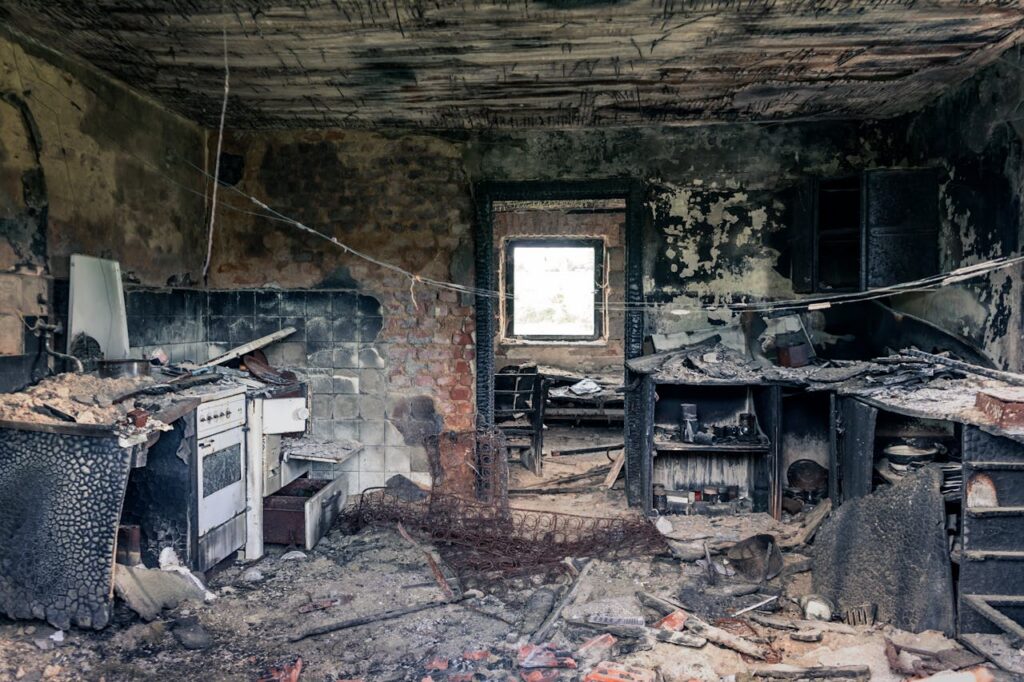
Minor damage – smoke and small-scale cleaning – runs $3,000 to $7,000. Moderate damage involving structural repairs, furniture restoration, and deeper cleaning runs $7,000 to $25,000. Severe damage requiring extensive reconstruction runs $25,000 to $100,000 or more.
But those ranges assume a straightforward situation. In practice:
| Damage Type | Typical Cost Range |
| Smoke damage only (contained) | $3,000 – $7,000 |
| Single room fire with water damage | $10,000 – $30,000 |
| Multi-room fire, moderate structural | $30,000 – $75,000 |
| Severe structural or whole-home | $75,000 – $200,000+ |
| Soot removal alone | $2,000 – $6,000 |
| Water damage remediation | $1,000 – $6,000 |
| HVAC duct cleaning | $500 – $2,000 |
| Ozone or thermal fogging treatment | $500 – $3,000 |
| Roof repair or replacement | $5,000 – $30,000 |
The cost per square foot for fire damage restoration typically ranges from $4 to $15, but severe structural damage pushes that higher. A 2,500 square foot home with significant structural damage can easily land above $50,000 before rebuilding costs are even factored in.
One thing that catches people off guard: insurance coverage has limits that don’t always match reality. Most policies have sub-limits on debris removal, contents, and additional living expenses. Review your policy carefully before assuming full coverage – and keep every receipt from day one.
For a realistic sense of how long the rebuild actually takes, it’s rarely the weeks contractors quote upfront. Permits, inspections, contractor availability, and material lead times all extend the timeline – often significantly.
Should You Restore – Or Sell?
This is the question that matters most, and it deserves a direct answer rather than a carefully hedged non-opinion.
Restoration makes sense when:
- The damage is contained and the cost is well within your insurance coverage
- The home has significant sentimental or financial value that justifies the timeline
- You have the capacity to manage a 3 to 12 month process while living elsewhere
- Your insurance settlement is realistic relative to the actual repair scope
Selling as-is makes more sense when:
- The restoration cost approaches or exceeds 50% of the home’s post-repair value
- Your insurance coverage falls significantly short of the actual damage
- The timeline of restoration – permits, contractors, inspections – would extend beyond 6 months
- The property has inherited complications, outstanding liens, or is not your primary residence
- You simply don’t have the bandwidth to manage a full restoration project
We’ve worked with homeowners at both ends of this decision. The ones who regretted restoration most were the ones who started the process before they fully understood the cost, the timeline, or their insurance gap. They spent months managing contractors, living in temporary housing, and spending money – only to end up with a property worth roughly what they put into it, sometimes less.
The pros and cons of selling fire-damaged homes as-is is worth reading before committing to either path. And if you inherited a fire-damaged property rather than lived in it, the calculus is different – whether to restore an inherited fire-damaged property covers that scenario specifically.
The Case for Selling As-Is After a Fire
If you’re leaning toward selling, here’s what that actually looks like in practice.
Selling a fire-damaged home on the open market through a traditional listing is difficult. Most conventional buyers can’t get financing on a property in this condition, and most realtors aren’t equipped to handle the complexity. Whether you need a realtor to sell a fire-damaged house is a question worth answering before you sign a listing agreement.
Selling directly to a cash buyer who specializes in fire-damaged properties removes most of the friction:
- No repairs required – the property sells in its current condition, debris and all
- No financing contingencies – cash buyers don’t need lender approval, so nothing falls through at the last minute
- Fast close – typically 7 to 14 days versus the 6 to 12 months a full restoration takes
- No carrying costs – no mortgage payments, insurance, and temporary housing costs stacking up during a long rebuild
- Certainty – you know the number, you know the timeline, and you move on
The honest trade-off is that a cash offer will be below what the home would be worth fully restored. That’s real and worth acknowledging. But when you subtract restoration costs, carrying costs, contractor overruns, insurance gaps, and the 6 to 12 months of your life managing the process, the net difference is often smaller than it first appears – and the certainty has real value.
We buy fire-damaged houses in any condition, for cash, with no repairs required. If you want to understand what the number looks like before committing to a restoration budget, get a cash offer with no obligation. It costs nothing to have that information before you decide.
Final Thoughts
The fire restoration process is manageable when the damage is contained, the insurance coverage is solid, and you have the time and bandwidth to see it through. When any of those conditions aren’t met, it becomes a long and expensive path that doesn’t always end where you expected.
Know the full cost before you start. Understand your insurance position before you sign with a contractor. And if selling is the better option for your situation, know that it’s a legitimate and often financially smarter path – not a default or a failure.
Previous