

A residential fire sprinkler system is the single most effective passive fire protection technology available to homeowners. Not smoke detectors, not fire extinguishers, not fire-resistant construction alone. Sprinklers. The data on this is consistent and unambiguous, and yet the majority of single-family homes in the United States have no sprinkler system at all.
In our work buying fire damaged homes, sprinkler systems come up in one of two ways. Either the home had one and the damage was contained, or it did not and the outcome was significantly worse. This guide covers what residential sprinkler systems are, what the data says about their effectiveness, whether you are legally required to have one, what installation involves, and whether it makes financial sense.
What the Data Says
According to NFPA’s 2024 U.S. Experience with Sprinklers report, civilian death rates are 90% lower in buildings with automatic sprinklers compared to those without. Additionally, 77% of fires are controlled by a single sprinkler head, with 96% controlled by five or fewer heads. NFPA has no record of a fire killing more than two people in a completely sprinklered building where the system was properly operating.
Working residential fire sprinklers control fires 96% of the time. After adopting residential sprinkler requirements, Bucks County, Pennsylvania, reported zero fire deaths in sprinklered homes over 22 years and a 93% average reduction in property damage.
Those numbers do not exist for any other residential fire protection technology. A smoke detector gives you warning. A sprinkler system acts on the fire directly, before the fire department arrives, before the fire has time to spread.
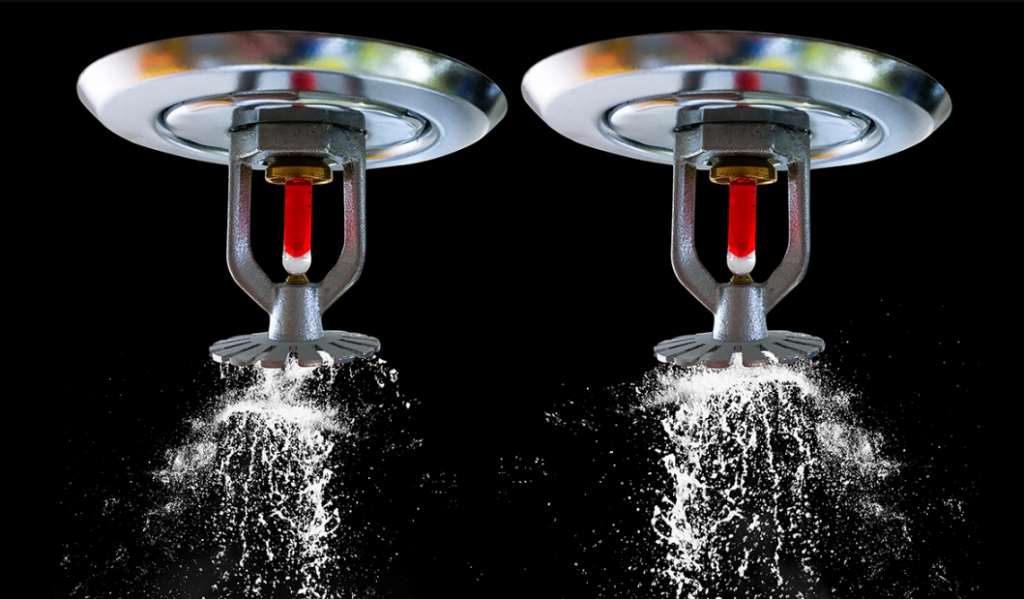
Are You Required To Have a Home Fire Sprinkler System
The answer depends on where you live and when your home was built.
Fire sprinkler requirements in the United States flow from two layers of regulation: national standards written by the National Fire Protection Association and building codes adopted at the state or local level. Most new commercial buildings over a certain size, all high-rises, and many assembly and institutional occupancies must have sprinklers, while most single-family homes remain exempt.
For residential properties specifically, the International Residential Code has included a requirement for sprinklers in new one and two-family homes since 2009, but adoption of that requirement is left to individual states and municipalities. Many states have not adopted it, which means the majority of new single-family homes in the United States are still built without sprinklers.
Whether a building needs a sprinkler system depends on its size, height, occupancy type, and the specific edition of the building code enforced in that jurisdiction.
The practical answer for most homeowners: you are almost certainly not legally required to retrofit an existing home with a sprinkler system. If you are building new, check your local building code. Some jurisdictions require sprinklers in new construction. Others do not. Your local building department can confirm what applies in your area.
The Three NFPA Standards That Govern Residential Sprinklers
Understanding which standard applies to your home matters before you talk to any contractor.
NFPA 13D covers one and two-family dwellings and manufactured homes. It was created to allow for cost-effective fire sprinkler systems in residential occupancies. The main goal of an NFPA 13D system is to provide life safety by preventing flashover for the first 10 minutes of a fire, giving occupants time to escape.
NFPA 13R applies to residential buildings up to four stories in height and covers apartments, condominiums, and other multifamily dwellings. It provides more stringent requirements than NFPA 13D because of increased occupant loads, stacked dwelling units, and longer egress times.
NFPA 13 is the most comprehensive standard and covers all building types. It provides the highest level of both life safety and property protection but at a higher cost and complexity than the residential-specific standards.
For a single-family home, NFPA 13D is the applicable standard. It is designed specifically to provide affordable, effective life safety protection in a one or two-family dwelling without the complexity of commercial system requirements.
How Residential Sprinkler Systems Work
A common misconception is that when one sprinkler activates, all sprinklers in the system activate simultaneously, drenching the entire home. This is wrong, and it is one of the most persistent myths that discourages homeowners from installing systems.
Residential sprinkler heads activate individually, triggered by the heat of the fire in their immediate vicinity. Each head contains a heat-sensitive element that breaks at a specific temperature, typically 135 to 165 degrees Fahrenheit, releasing water at that location. Only the head or heads closest to the fire activate.
97% of fires are controlled when sprinklers are inspected and maintained per code. Sprinklers operated in 92% of fires large enough to activate them.
The water damage from a single activated sprinkler head is significantly less than the water damage from a fire department response. A single residential sprinkler head releases approximately 13 gallons per minute. A fire hose releases 100 to 250 gallons per minute. The comparison is not close.
Types of Residential Sprinkler Systems
Wet pipe systems. The most common residential system. The pipes are always filled with pressurized water. When a sprinkler head activates, water flows immediately. These are the simplest, most reliable, and least expensive systems to install and maintain. Suitable for any home in a climate where pipes will not freeze.
Dry pipe systems. Pipes are filled with pressurized air rather than water. When a sprinkler activates, the air releases and water flows in. Used in unheated spaces such as garages, attics, and crawl spaces where freezing is a risk. More complex and more expensive than wet pipe systems.
Multipurpose systems. These combine the domestic water supply and the sprinkler system into one piping network. The same pipes that supply sinks, showers, and appliances also supply the sprinklers. Multipurpose systems are permitted under NFPA 13D and provide a cost-effective installation option for new construction because they reduce the amount of separate pipe needed for the sprinkler system.
What Does a Residential Sprinkler System Cost
Cost is the most common reason homeowners do not install sprinkler systems, and it is almost always overestimated.
The average expense to install sprinkler systems in new homes is about $1.35 per square foot. With the average construction cost of a single-family home at over $100 per square foot, that is paying approximately 1% of the home’s value for 24-hour fire protection. When the expense is spread over a 30-year mortgage, it is less than the price of a cup of coffee per week.
For retrofit installations in existing homes, where walls are already closed and piping must be threaded through finished spaces, the cost is higher.
| Installation Type | Cost Per Square Foot |
| New construction, wet pipe | $0.80 to $1.50 |
| New construction, multipurpose | $0.75 to $1.35 |
| Retrofit, existing home | $2.00 to $5.00 |
| Dry pipe system addition | $3.90 to $6.50 |
Homeowners can expect insurance savings of between 2 and 13% for the installation of residential fire sprinklers, depending on the insurer and the extent of system coverage. Over a 30-year mortgage period, those savings compound meaningfully against the installation cost. Residential insurance discounts from major carriers typically range from 5 to 15% of the total homeowner’s premium, with the higher end reserved for full-home systems that meet NFPA 13D standards.
Do You Need a Professional To Install a Residential Sprinkler System
Yes, without exception.
Residential sprinkler systems must be designed by a qualified fire protection engineer or licensed fire sprinkler contractor, permitted by your local building department, and inspected upon completion. The design involves hydraulic calculations that determine pipe sizing, water pressure requirements, and sprinkler head placement. These are not variables a homeowner can determine correctly without training and licensing.
Building owners face ongoing inspection, testing, and maintenance obligations that carry real financial and legal consequences if ignored. Insurers condition insurance discounts on documented compliance with NFPA 25. A building with a sprinkler system that has not been inspected on schedule may pay the same premium as an unsprinklered building, and a claim filed after a fire in a poorly maintained system can be denied entirely.
When selecting a contractor, look for the following:
- Licensed fire sprinkler contractor in your state
- NICET certified technicians on staff
- Experience specifically with residential NFPA 13D systems
- Written system design provided before any work begins
- Permit pulled before installation starts
Never allow a contractor to begin work without a permit. A sprinkler system installed without a permit cannot be inspected or certified, which voids any insurance benefit and creates liability if the system fails to perform.
Ongoing Maintenance Requirements
Installation is not the end of the obligation. NFPA 25, Standard for the Inspection, Testing, and Maintenance of Water-Based Fire Protection Systems, establishes the ongoing maintenance schedule for all sprinkler systems.
Basic maintenance requirements for residential systems:
- Monthly: visually inspect all sprinkler heads for damage, corrosion, or obstruction
- Annually: have the system professionally inspected and tested by a licensed contractor
- Every 5 years: full inspection of all components including control valves and water supply
- Every 10 years: sprinkler heads that cannot be field-tested should be replaced or laboratory-tested
Keep records of every inspection and service visit. These records are what your insurer requires to maintain the premium discount and what documentation a claim relies on if the system ever activates.
Is a Home Fire Sprinkler System Worth It
Based on the data and our experience, yes, for most homeowners considering new construction or a major renovation where retrofit cost is reduced by open framing.
74% of U.S. homeowners say they are more likely to buy a home with fire sprinklers. The system adds value, reduces insurance cost, and provides a level of fire protection that no other single technology delivers. The death rate reduction of 90% compared to unsprinklered buildings is a figure that belongs in every homeowner’s decision-making process.
For existing homes where retrofit cost is significant, the financial case is less straightforward and depends on individual circumstances. What is clear is that the cost is not what most people assume, the insurance savings are real, and the protection delivered is unmatched.
If you are rebuilding after a fire and making structural decisions about the rebuild, installing a sprinkler system during that process is significantly more cost-effective than a standalone retrofit. Open framing and accessible walls reduce labor cost substantially and the system can be integrated with new domestic plumbing rather than requiring separate infrastructure.
And if the fire damage has made rebuilding financially unviable, what happens when you cannot afford fire repairs covers every realistic option available when the numbers do not support the restoration path.
Final Thoughts
Residential fire sprinkler systems save lives. The data on this is not contested. A 90% reduction in civilian death rates, zero recorded multi-fatality fires in fully sprinklered residential buildings, and 96% fire control rates are numbers that belong in every discussion about residential fire protection.
The practical barriers, cost, permitting, contractor selection, and ongoing maintenance, are real but manageable. For new construction, the cost per square foot is minimal relative to the total build cost. For retrofits, the cost is higher but offset by insurance savings and property value addition.
If you are building new, install sprinklers. If you are renovating significantly, get a retrofit quote before dismissing the option. The conversation with how common house fires are and what they cost families puts the investment in context that the raw installation number does not convey on its own.
Previous